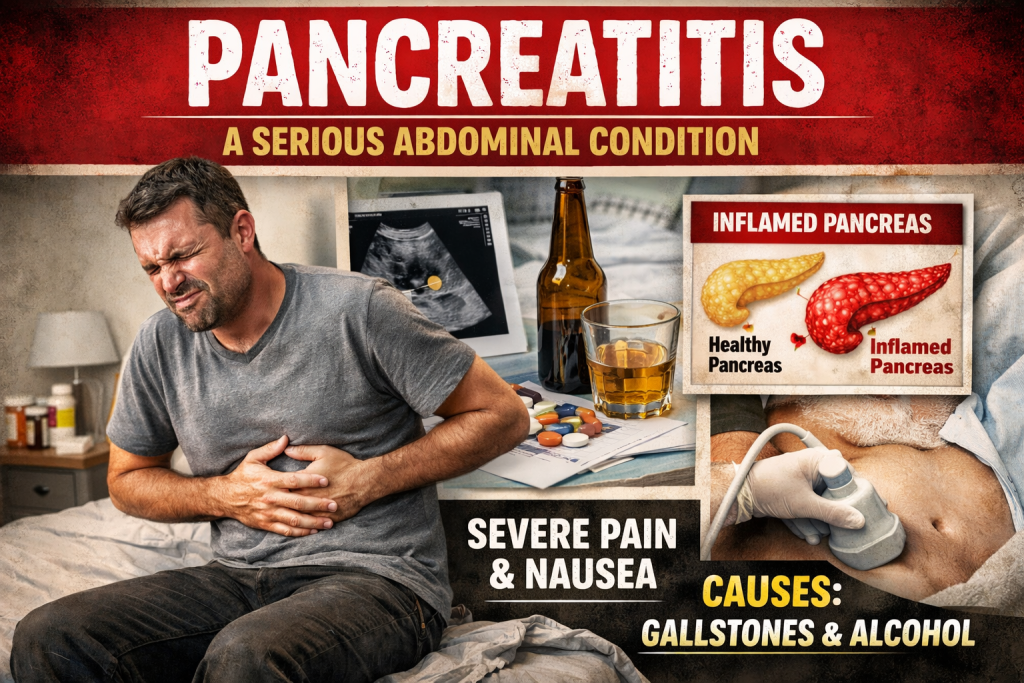
Pancreatitis is inflammation of the pancreas, a gland that helps your body digest food and regulate blood sugar. It can happen suddenly as an acute attack or develop over time as a long-term condition called chronic pancreatitis. In either form, it can cause significant abdominal pain and may lead to serious complications if not recognized early. Common causes include gallstones, heavy alcohol use, high triglycerides, certain medicines, and some inherited conditions.
Because symptoms can overlap with other digestive problems, pancreatitis is easy to underestimate at first. But severe upper abdominal pain, vomiting, fever, jaundice, or trouble breathing should never be ignored. Early diagnosis and treatment matter, especially when inflammation is severe or keeps coming back.
What Is Pancreatitis?
The pancreas sits behind the stomach and has two major jobs. First, it makes digestive enzymes that help break down fats, proteins, and carbohydrates. Second, it releases hormones such as insulin and glucagon, which help control blood sugar. In pancreatitis, the pancreas becomes inflamed, and that inflammation can interfere with both digestion and blood sugar regulation.
Doctors generally divide pancreatitis into two categories:
- Acute pancreatitis: a sudden episode that may improve within days with proper care.
- Chronic pancreatitis: ongoing inflammation that causes lasting damage and can reduce pancreatic function over time.
Acute vs. Chronic Pancreatitis
Acute pancreatitis
Acute pancreatitis usually starts abruptly. People often describe intense pain in the upper abdomen that may spread to the back. Some cases are mild, but others can be severe enough to damage nearby tissues or affect organs such as the lungs, kidneys, or heart.
Chronic pancreatitis
Chronic pancreatitis is a long-term inflammatory disease. Repeated inflammation can scar the pancreas and gradually reduce its ability to produce digestive enzymes and hormones. Over time, this may lead to malnutrition, fatty stools, weight loss, diabetes, and chronic pain.

The biggest difference
The key distinction is that acute pancreatitis may resolve, while chronic pancreatitis causes permanent structural damage. Chronic disease may also follow repeated acute attacks in some people.
Pancreatitis Symptoms
Symptoms can vary depending on whether the condition is acute or chronic, but pain is the symptom most people notice first.
Common symptoms of acute pancreatitis
Typical symptoms include:
- sudden upper abdominal pain
- pain that may move through to the back
- nausea and vomiting
- fever
- a rapid pulse
- a swollen or tender abdomen
NHS guidance also notes that the pain of acute pancreatitis may become worse after eating and can be severe enough to make it hard to get comfortable.
Common symptoms of chronic pancreatitis
Chronic pancreatitis may cause:
- repeated or ongoing belly pain
- oily, greasy, or foul-smelling stools
- unexplained weight loss
- poor digestion after meals
- diabetes that develops as pancreatic damage progresses
- jaundice in some cases if nearby ducts become blocked
When Pancreatitis May Be an Emergency
Get urgent medical attention if abdominal pain is severe, does not ease, or is paired with repeated vomiting, fever, jaundice, confusion, faintness, or shortness of breath. Severe acute pancreatitis can become life-threatening, especially when it leads to infection, organ failure, or widespread inflammation.
What Causes Pancreatitis?
Pancreatitis has several possible causes, and the most common ones are not the same for every person.
1. Gallstones
Gallstones are one of the leading causes of acute pancreatitis. A stone can temporarily block the area where the bile duct and pancreatic duct empty into the small intestine. That blockage can trap digestive juices and trigger inflammation.
2. Heavy alcohol use
Heavy alcohol use is another major cause, especially for chronic pancreatitis. Alcohol can injure pancreatic tissue directly and may also contribute to repeat attacks over time.
3. High triglycerides
Very high blood triglyceride levels can trigger acute pancreatitis, particularly when they are severely elevated.
4. Certain medicines
Some medicines have been linked to pancreatitis. Medication-related cases are less common, but doctors will often review your prescription and supplement list when the cause is not obvious.
5. Genetic and inherited conditions
Some people are more likely to develop pancreatitis because of inherited gene changes. NIDDK highlights genes such as PRSS1, SPINK1, CFTR, and CTRC as linked to pancreatitis risk.
6. Autoimmune disease
Autoimmune pancreatitis happens when the immune system attacks the pancreas. It is uncommon, but it is an important cause because it can mimic other pancreatic conditions.
7. Other causes
Other recognized causes include high calcium levels, abdominal injury, structural problems involving the pancreatic ducts, infections, and complications after certain procedures such as ERCP. In some cases, no clear cause is found, which doctors call idiopathic pancreatitis.
Risk Factors for Pancreatitis
Some risk factors are lifestyle-related, while others are inherited or tied to existing medical conditions.
Lifestyle risk factors
The strongest modifiable risk factors include:
- heavy alcohol use
- smoking
- obesity
- poor triglyceride control
Mayo Clinic notes that people who smoke cigarettes are more likely to develop pancreatitis, and quitting can lower that risk.
Medical risk factors
Risk also rises with:
- gallstones or gallbladder disease
- very high triglycerides
- high calcium levels
- cystic fibrosis and other genetic disorders
- a personal history of recurrent pancreatitis
- certain autoimmune conditions
Family history
A family history of pancreatitis or gene variants linked to the disease may increase risk, especially in younger people or in those who develop repeated episodes without a clear explanation.
How Pancreatitis Is Diagnosed
Doctors do not diagnose pancreatitis based on symptoms alone. They usually combine the clinical picture with blood tests and imaging.
Medical history and exam
A clinician will ask where the pain is, when it started, whether it radiates to the back, and whether you have vomiting, fever, alcohol exposure, gallstones, or a history of similar attacks.
Blood tests
Testing often includes lipase and amylase, which are pancreatic enzymes that commonly rise in acute pancreatitis. Lipase is generally considered more specific. Other blood work may check liver function, triglycerides, calcium, kidney function, blood sugar, and inflammatory markers.
Imaging
Doctors may use:
- Ultrasound to look for gallstones and bile duct problems
- CT scan to assess inflammation and complications
- MRI or MRCP for a closer look at the pancreas and ducts
- Endoscopic ultrasound in selected cases
Possible Complications
Pancreatitis is not just a pain condition. It can affect the whole body, especially when severe or untreated.
Complications of acute pancreatitis
Potential complications include:
- infection
- pancreatic necrosis
- pseudocysts
- kidney, lung, or heart failure
- bleeding or blood vessel problems
- death in severe cases
Complications of chronic pancreatitis
Long-term pancreatitis may lead to:
- chronic abdominal pain
- maldigestion and malabsorption
- vitamin deficiencies
- weight loss and malnutrition
- diabetes
- bone loss
- increased pancreatic cancer risk in some people
Can Pancreatitis Be Prevented?
Not every case is preventable, but many people can lower their risk by addressing major triggers.
Prevention strategies that matter
- limit or avoid alcohol
- stop smoking
- manage triglycerides
- treat gallstones when appropriate
- maintain a healthy weight
- review medications with a healthcare professional if you have a history of pancreatitis
- follow up on recurrent abdominal pain instead of self-treating indefinitely
For people who already have chronic pancreatitis, avoiding alcohol and tobacco is especially important because both can worsen progression.
Foods to Watch if You’re at Risk
No single “pancreatitis diet” works for everyone, but many clinicians recommend limiting alcohol and avoiding meals that are especially greasy or high in fat, particularly during recovery or if chronic pancreatitis is causing digestive symptoms. Because chronic pancreatitis can lead to exocrine pancreatic insufficiency, some people also need pancreatic enzyme replacement and dietitian support.
Key Takeaway
Pancreatitis is a potentially serious inflammatory condition that should never be dismissed as “just stomach pain.” The most common warning sign is upper abdominal pain, often with nausea or vomiting, but chronic disease may show up as weight loss, greasy stools, digestive trouble, or diabetes over time. Gallstones and alcohol are major causes, while smoking, high triglycerides, inherited conditions, and some medicines can also play a role. Fast medical evaluation is important because complications can be severe, especially in acute attacks.
FAQ About Pancreatitis
What does pancreatitis pain feel like?
It often feels like strong pain in the upper abdomen that may spread to the back. In acute pancreatitis, the pain can come on suddenly and be severe.
Is pancreatitis always caused by alcohol?
No. Gallstones are a leading cause of acute pancreatitis, and other causes include high triglycerides, certain medicines, genetic disorders, autoimmune disease, and high calcium levels.
Can pancreatitis go away on its own?
Acute pancreatitis can improve with proper medical care, but it should not be managed casually at home because severe cases can worsen quickly. Chronic pancreatitis does not fully reverse because it causes lasting damage.
Can pancreatitis cause diabetes?
Yes. Chronic pancreatitis can damage the hormone-producing part of the pancreas, which may lead to diabetes over time.
Is pancreatitis a medical emergency?
It can be. Severe pain, vomiting, fever, jaundice, confusion, or breathing trouble need urgent medical assessment.
Who is most at risk for pancreatitis?
People with gallstones, heavy alcohol use, smoking, high triglycerides, certain inherited conditions, and a history of repeated attacks are at higher risk.
Can children get pancreatitis?
Yes. It is less common in children than adults, but it does happen. In pediatric cases, genetic risk factors can be especially important.
Does chronic pancreatitis raise pancreatic cancer risk?
Long-term pancreatic inflammation is linked to a higher risk of pancreatic cancer, especially in certain high-risk groups.