Kidney Disease: Causes, Early Symptoms, Risk Factors, and When to Get Checked
Your kidneys do far more than make urine. These two fist-sized organs filter waste from the blood, help regulate fluid and minerals, support blood pressure control, activate vitamin D, and help the body make red blood cells. When kidney function starts to decline, the change is often quiet at first, which is why many people do not realize anything is wrong until damage is already significant.
Chronic kidney disease, or CKD, is a major global health problem. Recent estimates suggest kidney disease affects hundreds of millions of people worldwide, and CKD often goes undiagnosed because early symptoms may be absent or easy to dismiss. In the United States alone, more than 1 in 7 adults are estimated to have CKD, and many do not know it.
This guide explains how the kidneys work, what causes kidney disease, the warning signs to watch for, who is most at risk, how CKD is diagnosed, and what you can do to protect kidney health.
What do healthy kidneys do?
Healthy kidneys continuously filter blood and remove waste and excess fluid through urine. They also help keep the body’s internal chemistry stable by balancing sodium, potassium, acid-base status, and other electrolytes. In addition, the kidneys make or activate hormones involved in blood pressure regulation, vitamin D metabolism, and red blood cell production.
The kidney’s basic working units are called nephrons. Damage to these filtering units can reduce how effectively the kidneys clear waste, manage fluid, and maintain normal body functions. Over time, that can affect many systems beyond the urinary tract, including the heart, bones, and blood.
 What is kidney disease?
 What is kidney disease?
Kidney disease is a broad term for conditions that damage the kidneys or reduce how well they work. The most common long-term form is chronic kidney disease, which means the kidneys are damaged or have a structural problem that prevents them from filtering blood the way they should. CKD is generally defined by decreased kidney function, signs of kidney damage such as albumin in the urine, or both, lasting at least 3 months.
Kidney disease is not always chronic. Acute kidney injury, or AKI, is a sudden drop in kidney function that can happen over hours or days, often during serious illness, dehydration, low blood flow, infection, blockage, or medication-related injury. AKI can sometimes improve, but severe cases may leave lasting damage.
Main types of kidney disease
Chronic kidney disease
CKD is the most common category and usually develops gradually. It may be related to diabetes, high blood pressure, inherited conditions, immune disorders, or repeated injury to the kidneys.
Acute kidney injury
AKI is a rapid decline in kidney function. It often occurs in hospital settings but can also develop outside the hospital from severe dehydration, infections, certain drugs, reduced blood flow, or urinary obstruction.
Polycystic kidney disease
Polycystic kidney disease is an inherited disorder in which cysts form and enlarge in the kidneys, sometimes leading to loss of function over time.
Glomerular diseases
Conditions such as glomerulonephritis and IgA nephropathy affect the kidney’s filtering units and may result from immune activity, inflammation, or other underlying diseases.
Kidney infections, stones, and structural problems
Kidney infections, recurrent urinary obstruction, reflux, and some stone-related complications can injure the kidneys, especially when severe, repeated, or left untreated. A urinary tract infection that spreads to the kidneys can be dangerous and needs prompt treatment.
What causes kidney disease?
Diabetes
Diabetes is one of the leading causes of CKD. Over time, high blood sugar damages the small blood vessels and filtering structures inside the kidneys. Good glucose control is one of the most important ways to lower risk.
High blood pressure
Hypertension is another major cause. Persistently high pressure damages blood vessels throughout the body, including the kidneys. Kidney disease can also worsen blood pressure control, creating a harmful cycle.
Heart and vascular disease
Heart disease and kidney disease are closely linked. Poor cardiovascular health can reduce kidney perfusion, while CKD raises the risk of heart complications.
Autoimmune and inflammatory diseases
Immune-related disorders such as lupus nephritis and some forms of glomerulonephritis can directly attack kidney tissue.
Inherited disorders
A family history matters. Some kidney diseases, including polycystic kidney disease and Alport syndrome, have a genetic basis.
Medication-related kidney injury
Some medicines can harm the kidneys, especially in high doses, during dehydration, or when used for long periods. Common examples include NSAID pain relievers such as ibuprofen and naproxen, certain antibiotics, and contrast agents used for some imaging tests. Proton pump inhibitors have also been linked to kidney problems in some patients.
Early signs and symptoms of kidney disease
One reason CKD is often missed is that symptoms can be vague or absent early on. Testing is often the only reliable way to find it before it becomes advanced.
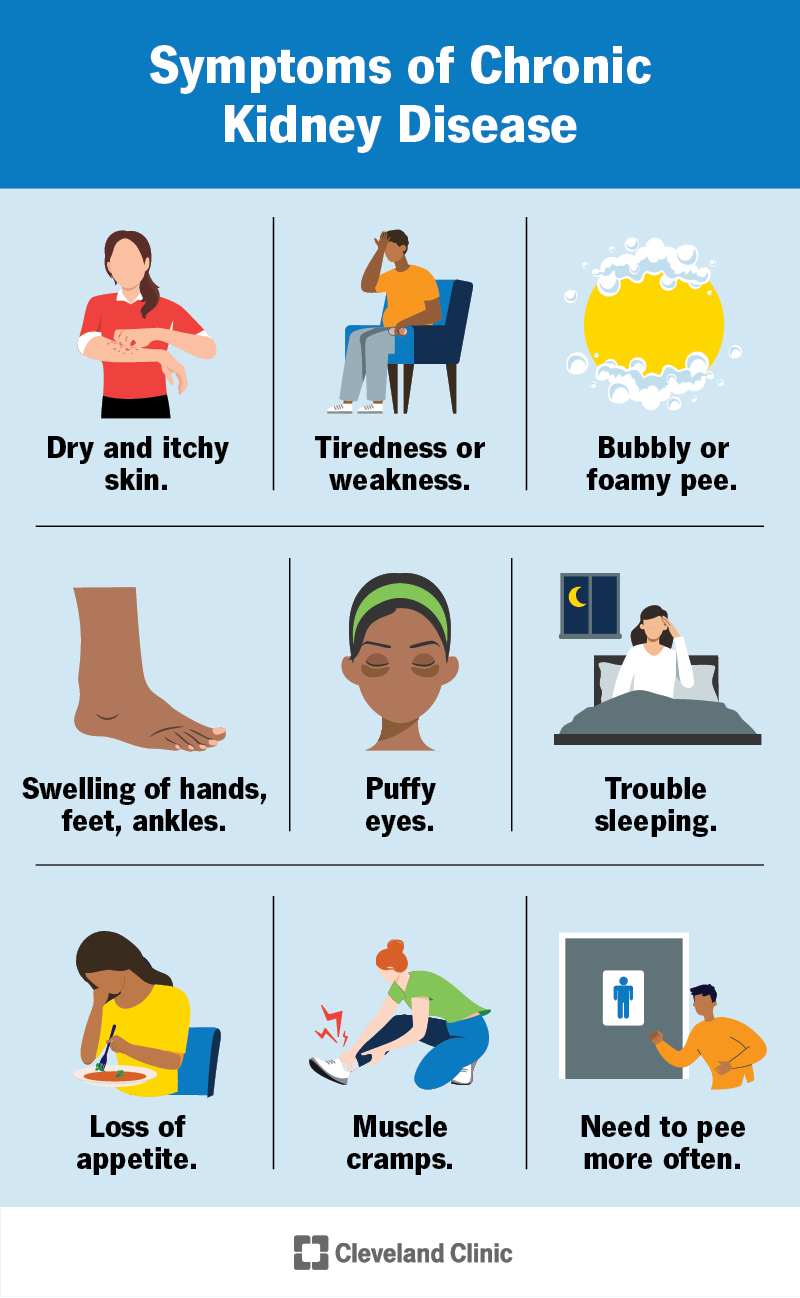
When symptoms do appear, they may include:
- changes in urination, including foamy urine, darker urine, blood in the urine, urinating more often at night, or changes in volume
- swelling in the feet, ankles, hands, or around the eyes from fluid retention
- fatigue, weakness, or reduced stamina
- poor appetite, nausea, or a metallic taste
- itching
- muscle cramps
- trouble concentrating or sleep problems
- shortness of breath, especially if fluid builds up or anemia develops
Foamy urine can be a clue to albuminuria, which means albumin is leaking into the urine. Albuminuria may be an early sign of kidney disease even when eGFR is still normal.
Who is at higher risk?
You may need kidney screening more regularly if you have:
- diabetes
- high blood pressure
- heart disease
- a family history of kidney disease or kidney failure
- older age
- obesity
- a history of acute kidney injury
- smoking exposure or heavy tobacco use
Some racial and ethnic groups have a higher burden of CKD in the United States, including Black, Hispanic, Native American, Asian American, and Pacific Islander populations, although the reasons are complex and include differences in risk-factor burden, access to care, and broader social determinants of health.
How chronic kidney disease is staged
CKD is commonly described by estimated glomerular filtration rate, or eGFR, along with urine albumin levels. An eGFR below 60 for 3 months or more can indicate CKD, but kidney damage may also be present at higher eGFR values if albuminuria exists. Current guidance emphasizes evaluating both filtration and albumin leakage together because both help predict risk.
In practical terms, lower eGFR usually means more advanced loss of kidney function. Albumin in the urine can signal kidney damage earlier, sometimes before symptoms begin.
How doctors diagnose kidney disease
The two most important screening tools are a blood test and a urine test.
Blood testing
A blood creatinine test is used to estimate eGFR, which reflects how well the kidneys are filtering.
Urine testing
A urine albumin-to-creatinine ratio, often called uACR, looks for albumin leakage into the urine. Repeated abnormal results over 3 months or more support a CKD diagnosis.
Other tests
Depending on the situation, doctors may also use urinalysis, kidney ultrasound, CT or MRI imaging, and sometimes kidney biopsy to determine the cause and extent of damage.
When to see a doctor
Get medical attention if you notice blood in your urine, persistent swelling, severe fatigue without a clear reason, ongoing nausea, a major change in urination, pain or burning with urination, severe flank pain, or shortness of breath. People with diabetes, high blood pressure, heart disease, or a family history of kidney problems should ask about routine kidney testing even if they feel well.
How to help protect your kidneys
Control blood pressure
Blood pressure control is one of the most important ways to slow kidney damage. NIDDK notes that controlling blood pressure is a key part of treating and protecting the kidneys in CKD.
Manage diabetes carefully
Keeping blood sugar in target range lowers the risk of diabetic kidney damage and may slow progression if CKD is already present.
Stop smoking
Smoking damages blood vessels and is linked to faster kidney function decline. Quitting benefits both kidney and cardiovascular health.
Be cautious with over-the-counter pain relievers
Frequent or long-term NSAID use can be risky, especially in older adults, people with CKD, or anyone who is dehydrated or taking certain other medications.
Choose a kidney-friendly lifestyle
A heart-healthy lifestyle also helps the kidneys: regular physical activity, less sodium, more minimally processed foods, maintaining a healthy weight, and following medical advice on protein, fluid, and other dietary targets if kidney disease is already present.
Living with kidney disease
A CKD diagnosis does not automatically mean dialysis is imminent. Many people live for years with stable or slowly progressing disease, especially when the underlying cause is treated and monitoring is consistent. Care often includes a primary care clinician, kidney specialist, dietitian, and medication review to reduce further injury and manage complications such as anemia, bone-mineral problems, and cardiovascular risk.
If kidney function falls to kidney failure, treatment options can include dialysis or kidney transplant.
Key takeaway
Kidney disease often develops quietly, but it is not something to ignore. Diabetes and high blood pressure are the biggest drivers, and early testing with eGFR and urine albumin can uncover problems long before symptoms become obvious. The earlier kidney disease is found, the more opportunity there is to slow progression and protect long-term health.